
Thoracoscopy
Thoracoscopy is a medical procedure that is used to take a look at the surface or area around the lungs. Doctors use a thoracoscope that is a thin tube with camera to diagnose the area or take a sample of lung tissue or lymph nodes. It can also be used to view esophagus, chest walls, diaphragm and other area as well. This process is used as a part of the surgical procedure video-assisted thoracoscopic surgery that is a minimally invasive chest surgery. Thoracoscopy is a diagnostic procedure to have a look at lungs.
When is Thoracoscopy needed?
Pulmonologists perform Thoracoscopy or Pleuroscopy for the following reasons:
- Pleural Effusion Diagnosis : Thoracoscopy is essential for evaluating and diagnosing the cause of pleural effusions, involving the accumulation of fluid in the pleural space surrounding the lungs.
- Lung Biopsy : It is employed to obtain tissue samples from the lung for accurate diagnosis of conditions such as tumours, infections, or interstitial lung diseases.
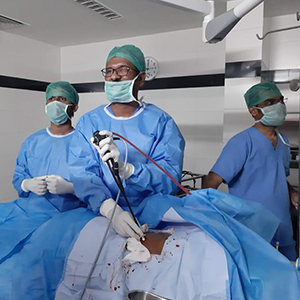
- Pleurodesis : Thoracoscopy is used in pleurodesis procedures, aiming to prevent recurrent pleural effusions by inducing adhesion between the pleural layers.
- Lung Nodule Evaluation : It aids in the assessment of lung nodules, allowing for biopsy or removal.
- Decortication : In cases of pleural thickening or fibrosis, thoracoscopy facilitates decortication, a surgical procedure to free the lung and improve respiratory function.
In order to prepare for thoracoscopy, doctors give specific instructions which may include fasting before the procedure. The patient has to inform them about medications, allergies, and medical history. As per the case, doctors may provide any specific pre-operative guidelines.