
pneumothorax
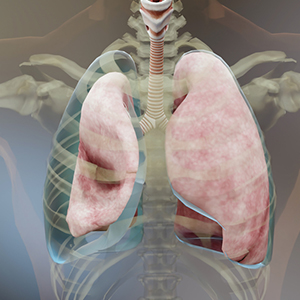
A pneumothorax (collapsed lung) happens when there is air within the space between your chest wall and your lung (pleural space). Air in the pleural space can build up and press against your lung, causing it to partially or completely collapse. Pneumothorax is also known as punctured lung.
Signs and symptoms of a pneumothorax include:
- Chest pain on one side, particularly when taking breaths.
- Cough.
- Fast breathing.
- Fast heart rate. Fatigue.
- Shortness of breath (dyspnea).
- Bluish skin, lips or nails (cyanosis).
If you have got symptoms of a collapsed lung, go to the nearby emergency room. You will require immediate care.
How is pneumothorax treated?
Your treatment depends on the cause, size and severity of your pneumothorax. Treatment may include:
- Observation : If your pneumothorax is minor, your doctor may watch you for signs of heart or breathing issues. You’ll see your doctor for a follow-up visit.
- Oxygen therapy.
- Thoracentesis : Placing a temporary needle between your ribs on the side of the pneumothorax to evacuate the air in your chest.
- Chest tube drainage : If you have got a larger pneumothorax, your doctor may put a tube in your chest to decrease the air in your pleural space. As the air pressure comes down, your lung re-expands and heals. You will have this tube in place for a couple of days or longer.
- Chemical pleurodesis : To prevent your lung from collapsing again, a doctor may perform pleurodesis. Your doctor makes a cut (entry point) and inserts a tube. At that point they utilize chemicals (such as doxycycline or talcum powder) to connect your lung to your chest cavity, eliminating extra space.
Some individuals require surgery to repair damage so a punctured lung can be healed.
You'll require surgery if you don’t respond to other treatments or have:
- Persistent air leakage from the chest tube.
- A lung that doesn’t expand in spite of chest tube insertion.
- A repetitive collapsed lung.
- Pneumothorax in both lungs.
- Traumatic lung injuries.