
Endobronchial Ultrasound( convex and radial)
Endobronchial ultrasound (EBUS) is a minimally invasive medical procedure that combines different procedures bronchoscopy and ultrasound imaging. It is primarily used for diagnosing and staging lung cancer. During EBUS, a flexible bronchoscope is used that has an ultrasound transducer attached to it. The tip of the instrument is inserted through the patient's airways, providing real-time imaging of the lungs and surrounding structures. This enables precise guidance for needle aspiration of suspicious lesions and aiding in obtaining accurate tissue samples for diagnosis and determining the extent of cancer involvement.
There are two main types of endobronchial ultrasound namely, Convex EBUS and Radial EBUS. Convex EBUS employs a convex-shaped ultrasound probe at the bronchoscope's tip that provides a broad field of view for lymph node and tumor assessment. Radial EBUS uses a rotating ultrasound probe for a 360-degree view that facilitates detailed imaging of airway walls and peripheral lung lesions.
When is Endobronchial Ultrasound needed?
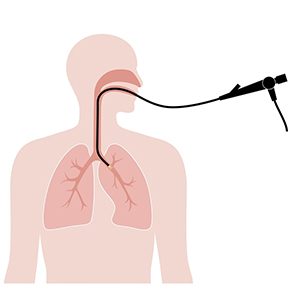
Endobronchial Ultrasound is used by doctors to have a detailed look at suspicious things in the X-ray or CT scan reports. It can be used to diagnose the following things:
- Lung Cancer Diagnosis : EBUS is crucial for obtaining tissue samples from lung lesions to diagnose and characterize cancer.
- Staging Lung Cancer : It helps to determine the extent of cancer spread within the lungs and adjacent structures.
- Evaluation of Mediastinal Lymph Nodes : EBUS aids in assessing lymph nodes in the mediastinum for signs of metastasis.
- Detection of Other Thoracic Conditions : It may be used to investigate various pulmonary and mediastinal abnormalities beyond lung cancer.